What Is BAGS Racing: How the Bookmakers Afternoon Greyhound Service Works
Best Greyhound Betting Sites – Bet on Greyhounds in 2026
 Available in US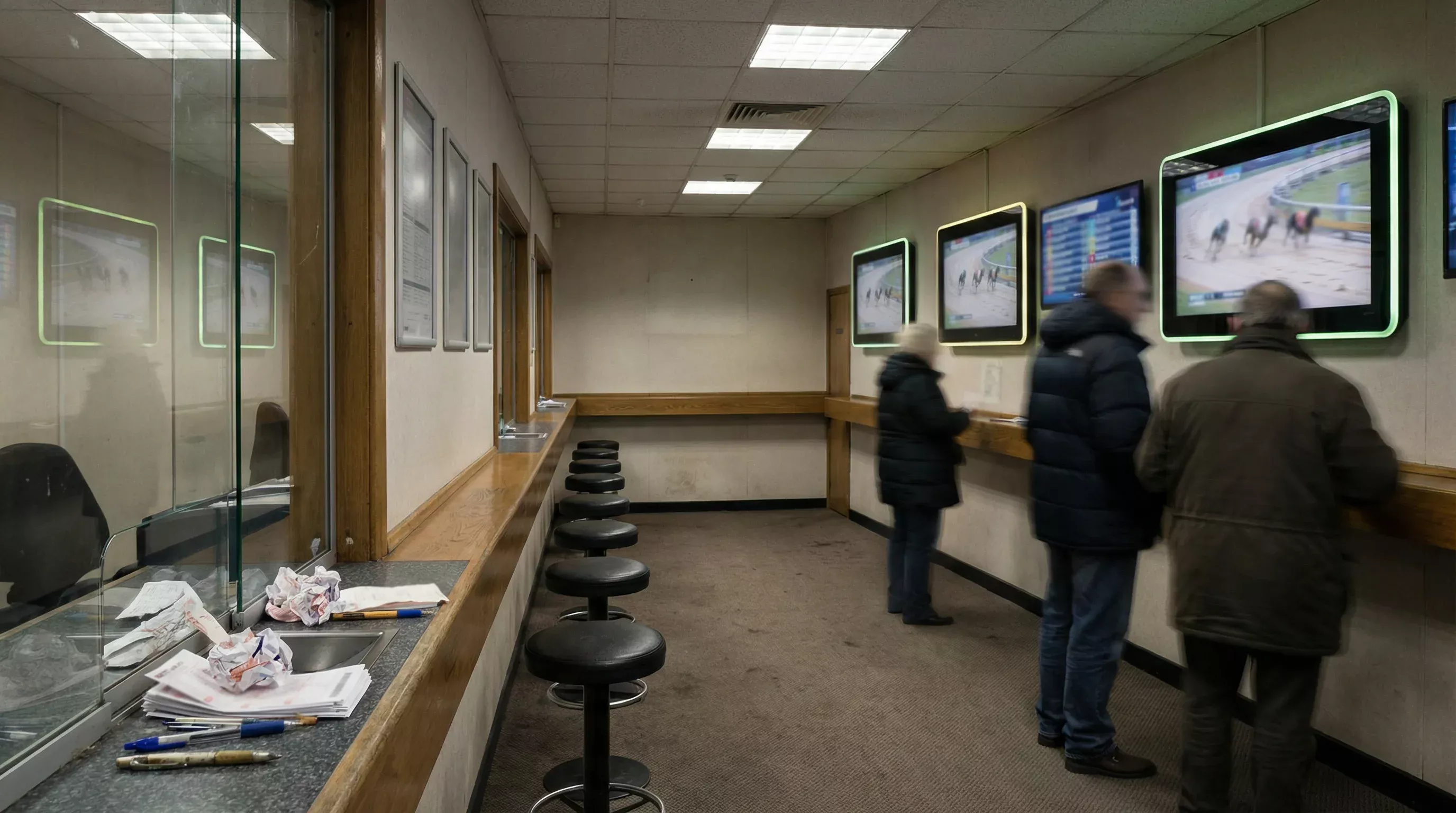
The Engine Behind Daytime Greyhound Racing
If you have ever wondered why Sunderland stages greyhound racing on a Monday afternoon — not exactly a natural draw for a paying audience — the answer is three words long: BAGS racing. The Bookmakers’ Afternoon Greyhound Service is the system that underpins the majority of daytime greyhound fixtures in the UK, and understanding how it works is essential to understanding why the Sunderland race schedule looks the way it does.
BAGS is, in essence, a contract between the bookmaking industry and the greyhound tracks. Bookmakers need content to offer their customers throughout the day. Greyhound tracks need revenue to sustain their operations. BAGS connects the two by paying tracks to stage fixtures at times that suit the betting market, with the races broadcast live into betting shops and streaming platforms. It is an arrangement that has shaped the sport for decades, and at Sunderland, it is the reason most of the weekly fixtures exist.
This article explains the mechanics of BAGS, Sunderland’s specific role within the system, and what the arrangement means for the betting landscape that surrounds every race at the stadium.
BAGS Mechanism: How Fixtures Are Contracted and Distributed
BAGS operates through a contracting model. The bookmaking industry, represented collectively, negotiates agreements with track operators to stage a specified number of fixtures per year. These fixtures are distributed across the week and across the country so that, at almost any time during the day, there is a greyhound meeting taking place somewhere in the UK that bookmakers can offer to their customers.
The scale of the operation is considerable. According to data from Towcester Racecourse’s BAGS explainer, approximately 5,772 greyhounds participate across 74 BAGS meetings every week. The service distributes around £26 million per year to the contracted tracks, making it the single largest source of revenue for many venues. Without BAGS income, a significant number of UK greyhound stadiums would struggle to remain financially viable — the trackside audience at a Monday afternoon meeting does not generate enough gate revenue to cover operational costs on its own.
The fixtures are staggered to avoid overlap. A morning meeting at one track will be followed by an early-afternoon slot at another and a late-afternoon slot at a third. This scheduling ensures that bookmakers always have fresh greyhound racing available, creating a continuous stream of betting opportunities throughout the trading day. The races are broadcast live via SIS (Satellite Information Services) and streamed to online platforms, meaning that the audience for a BAGS meeting is overwhelmingly remote — watching on screens in betting shops or on mobile devices, not sitting in the stands at the track.
The contract structure is managed through tiers. The top tier, Premier Greyhound Racing, encompasses the fixtures at the most prominent venues, including all ARC-operated tracks. Below that sit lower-tier BAGS meetings at smaller venues. The distinction matters because PGR fixtures receive greater broadcast priority, wider coverage, and higher betting volumes. A race at a PGR meeting is more visible to more bettors than one at a lower-tier meeting, which influences the depth and accuracy of the odds.
As Mark Kingston, Director of Premier Greyhound Racing, stated when all major retail bookmakers signed PGR contracts: greyhounds have always been a core part of the betting-shop offering. The BAGS system, as he told SBC News, represents the industry’s recognition that this relationship is worth sustaining through formal agreements and significant financial commitment.
Sunderland’s BAGS Role: How Many Meetings and Why
Sunderland’s involvement in BAGS is channelled through its ownership by the Arena Racing Company. ARC operates twelve greyhound stadiums under the GMG (Greyhound Media Group) banner, and these venues collectively deliver a minimum of 1,619 fixtures per year under the BAGS agreement. Sunderland’s contribution to that total is shaped by its four-fixture weekly schedule: Monday, Wednesday, Friday, and Sunday.
Of those four fixtures, the daytime meetings — Monday and Wednesday — are the most clearly BAGS-driven. They are staged at times designed to slot into the national scheduling grid, with first races typically starting in the late morning or early afternoon. The audience at the track for these meetings is minimal; the purpose is content generation for the betting market. The races are broadcast, odds are offered, bets are placed, and the income flows from the bookmakers through BAGS to the track.
The Friday evening meeting is different. It is partly a BAGS fixture in the sense that it is covered by the same broadcast and betting infrastructure, but it also functions as an event for a live audience. Friday nights at Sunderland attract a crowd that comes for the experience — the atmosphere, the restaurant, the social occasion — and the racing is both a betting product and a spectacle. The Sunday morning meeting occupies a middle ground: it generates BAGS content and attracts a smaller but regular trackside audience of enthusiasts.
The volume of BAGS meetings at Sunderland has a direct effect on the quality and quantity of racing data available. Four fixtures per week means approximately forty to fifty races per week, producing a constant stream of results, times, and form data. For anyone studying Sunderland form, this density of data is an advantage — dogs race frequently enough to build robust form profiles within a matter of weeks, and patterns in times, trap performance, and sectional splits emerge quickly. At tracks with fewer fixtures, the same data accumulation takes considerably longer.
BAGS and the Betting Landscape: Impact on Odds and Coverage
The existence of BAGS fundamentally shapes the betting landscape for greyhound racing at Sunderland and every other contracted track. Without BAGS, greyhound betting would be limited to evening meetings with live audiences — a handful of events per week, attracting relatively niche interest. With BAGS, greyhound racing becomes a continuous betting product, available throughout the day, every day, and priced by the same bookmakers that offer odds on football, horse racing, and every other sport.
The odds for BAGS meetings are set by bookmakers’ trading teams, who use a combination of form data, market signals, and algorithmic models to price each race. Because BAGS meetings generate high volumes of racing across the country, the trading teams must price many races in a short time. This creates an environment where the odds at lower-profile meetings — including Sunderland’s Monday and Wednesday cards — may be less precisely calibrated than those for high-profile evening events. For informed bettors, that imprecision is where opportunity lies. A dog whose form at Sunderland warrants a shorter price may be offered at longer odds simply because the market has not invested the same analytical effort into a Tuesday lunchtime fixture that it would into a Grand Prix final.
Coverage is the other dimension. BAGS meetings at Sunderland are broadcast through SIS to betting shops and streamed online through bookmaker platforms. This means that anyone with a bookmaker account can watch Sunderland races live, study the dogs in the pre-race parade, and assess the running in real time. The broadcast quality has improved steadily, and the commentary that accompanies BAGS meetings provides additional information — trap speeds, going reports, and the occasional insight from trackside reporters — that supplements the written form data.
The broader significance of BAGS for the sport is economic. The approximately £26 million that BAGS distributes annually to contracted tracks is the financial backbone of UK greyhound racing. It pays for track maintenance, staff salaries, prize money, and the infrastructure that keeps stadiums operational. At Sunderland, the BAGS income subsidises not just the daytime meetings but the entire operation — the Friday night experience, the Category One events, and the maintenance of a track surface that supports balanced, fair racing. When you place a bet on a Sunderland race, the ecosystem you are engaging with exists largely because BAGS ensures there is always a race to bet on.
What Is BAGS Racing — More on this topic at sunderland dogs results.
See also Sunderland Dogs Opening Times and Admission Prices.
