Sunderland Greyhound Track Records: All-Time Best Times by Distance
Best Greyhound Betting Sites – Bet on Greyhounds in 2026
 Available in US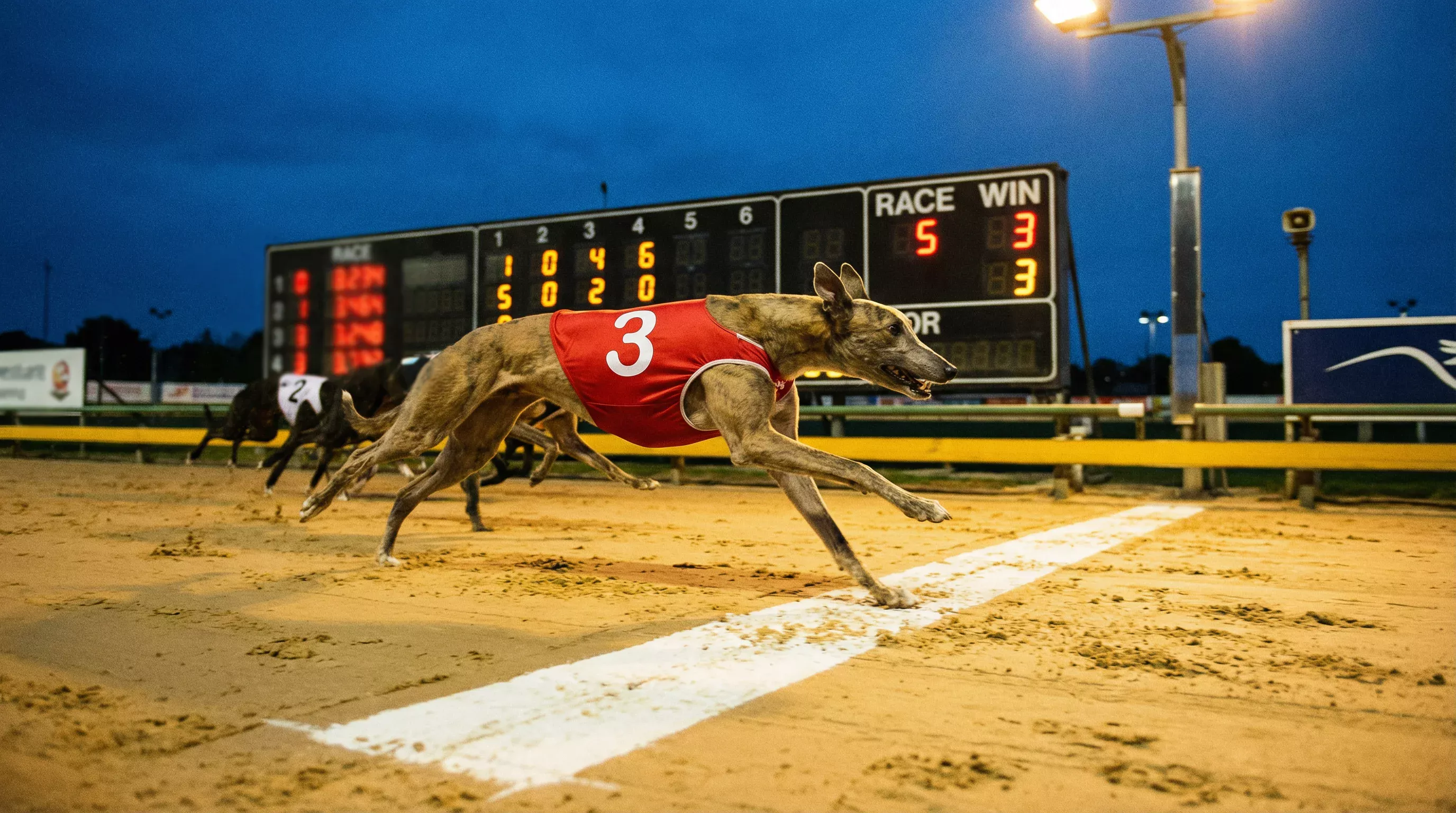
The Fastest Dogs Ever to Run at Sunderland
Track records are the ceiling. They represent the best time ever posted at a given distance on a specific track, under whatever conditions existed on that particular day. At Sunderland, where greyhounds have raced since 1940, those records carry decades of history and serve a practical function for anyone studying the results: they tell you how fast this track can be, and therefore how close any current runner is to the limit.
A track record is not just a number on a wall. It is a benchmark against which every subsequent performance is measured, whether consciously or not. When a dog posts a time within half a second of the track record at its distance, that is a statement performance — one that places the dog among the best to have raced at the venue. When the record itself falls, it usually signals a generational talent, a perfect set of conditions, or both.
What follows is a breakdown of the current records at Sunderland’s four racing distances, the context that surrounds those times, and a guide to what constitutes a strong performance at each trip — because understanding where the record sits is only useful if you also understand where the average sits.
Records by Distance: 261m, 450m, 640m, 828m Best Times
Sunderland’s four racing distances each have their own record, and the spread of those times tells a story about the character of the track itself.
The 261m sprint record stands at the sharp end — a time in the low 15-second range that reflects pure acceleration and bend speed with almost no time for deceleration to set in. Sprint records are volatile by nature because the margin between an exceptional time and a good one is so thin. A hundredth of a second matters here. The dog that set the 261m mark would have broken fast, hit the bend on the inside, and carried every fraction of its speed through the turn and into the run-in. Replicating that sequence — trap speed, bend positioning, and a clear run — is rare, which is why sprint records can stand for years despite many dogs attempting the distance.
The 450m record, set over Sunderland’s bread-and-butter trip, is the most contextually important. More dogs have raced this distance than any other at the stadium, which means the record has faced the most challenges. The 450m mark reflects a dog that combined fast trapping with sustained pace through two bends and finished without fading. Times in the high 27-second to very low 28-second range represent elite performance at this distance. To appreciate the record’s significance, consider that Sunderland’s very first race winner in 1940, a dog called Percheron, clocked 28.35 seconds on opening night. The gap between that time and the current record illustrates how much the sport — and the dogs — have evolved over eighty-five years of racing at this stadium.
At 640m, the record represents a stayers-distance performance that balanced early speed with sustained effort over four bends. Stayers records are typically set by dogs with rare combinations of pace and endurance — animals that can hold near-sprint speeds for longer than their competitors. The 640m mark at Sunderland is a time that most A-grade stayers will never approach in their careers, which is precisely what makes it a record rather than a routine result.
The 828m marathon record is the rarest and the most remarkable. Covering two full laps of the circuit, the marathon record-holder maintained a pace over six bends that would be competitive at shorter distances. Marathon records are set infrequently because the distance appears less often on the card and the pool of dogs capable of producing record pace over 828m is tiny. When the marathon record falls, it tends to fall by a clear margin, because the dog breaking it is typically operating in a class of its own.
Record Context: Surface, Era and Conditions
A track record means nothing in a vacuum. Every record at Sunderland was set on a specific date, under specific conditions, and those factors determine whether the time should be treated as an absolute measure of canine ability or as a product of favourable circumstances.
Surface is the most constant variable, but even Sunderland’s all-weather sand has changed over the decades. The stadium’s track has been resurfaced and maintained to evolving standards since its opening in 1940. The composition of the sand, the depth of the running surface, and the drainage underneath have all been modified over time. A record set in the 1990s was set on a different surface profile from one set in 2024, even though both are categorised as all-weather sand. This is why direct comparison of records across eras is imperfect. The dogs are faster now, but the surface they run on is not the same surface their predecessors ran on.
Going conditions on the day matter too. Sand absorbs water, and a damp surface slows dogs down measurably. Most track records are set on dry, firm going — conditions that allow the sand to provide maximum grip with minimal drag. A record set on a fast night should be weighted differently from a near-miss posted on heavy going. The going report is published before each meeting, and if you see a dog post a time close to the track record on slow going, that performance is arguably more impressive than the record itself in pure effort terms.
Era of racing is another contextual layer. Greyhound breeding has improved steadily, and the dogs competing in 2026 are, on average, faster than those from twenty or thirty years ago. The 2025 English Greyhound Derby at Towcester, won by Droopys Plunge in a notably tight finish, showcased the level of competition at the very top of the sport. When a Sunderland record falls, it is usually because a dog of that calibre has passed through the stadium — a runner good enough to compete at the national level, not just the local one. The record books at any track are written by its best visitors as much as its regular residents.
Benchmark Times: What a Good Performance Looks Like at Each Distance
Track records are aspirational. For day-to-day analysis of Sunderland results, you need benchmark times — realistic thresholds that separate good performances from ordinary ones and ordinary ones from poor. These benchmarks shift depending on grade, going, and the individual race, but a working framework gives you something to measure against.
At 261m, any time under 16.00 seconds is sharp. Times in the mid-15-second range belong to genuine sprint specialists in top grades. Below 15.50 is rare and indicates a dog with elite early pace. Above 16.30 and you are looking at a lower-grade sprinter or a dog that encountered trouble at the bend. The window between good and poor is narrow at this distance — roughly half a second separates a strong performance from a mediocre one.
The 450m standard distance has the most populated benchmark scale. A-grade dogs on good going will clock times in the 27.80 to 28.40 range. B-grade runners sit between 28.40 and 29.00. C-grade dogs run 29.00 to 29.60, and D-grade races typically produce times above 29.60. These are approximations — any single race might deviate depending on pace, interference, and conditions — but they form a reliable ladder. If a C-grade dog posts 28.60, it is running well above its grade and will likely be promoted. If an A-grade dog posts 29.20, something went wrong.
At 640m, benchmark times stretch into the upper 38-second to lower 40-second range for competitive stayers. Times below 39.00 on firm going indicate a high-quality performer. Above 40.50, the dog is struggling with either the distance or the conditions. The wider range reflects the fact that 640m fields contain more variation in ability than standard-distance races.
Marathon benchmarks at 828m are the hardest to pin down because of the limited data. Competitive times sit in the upper 52-second to lower 54-second range for graded runners. A time below 52.00 is exceptional and places the dog close to the track record territory. Above 55.00 and the dog is either outclassed at the distance or racing on heavy going. Given how few 828m races are run, even experienced observers sometimes lack a clear sense of what constitutes a good time — which is precisely why having a benchmark framework is useful. It removes the guesswork and replaces it with a reference point that holds up across the limited sample.
Sunderland Greyhound Track Records — More on this topic at sunderland dogs results.
See also Sunderland Dogs Trap Stats.
