All-Weather Sand Tracks in Greyhound Racing: Surface Science and Speed Impact
Best Greyhound Betting Sites – Bet on Greyhounds in 2026
 Available in US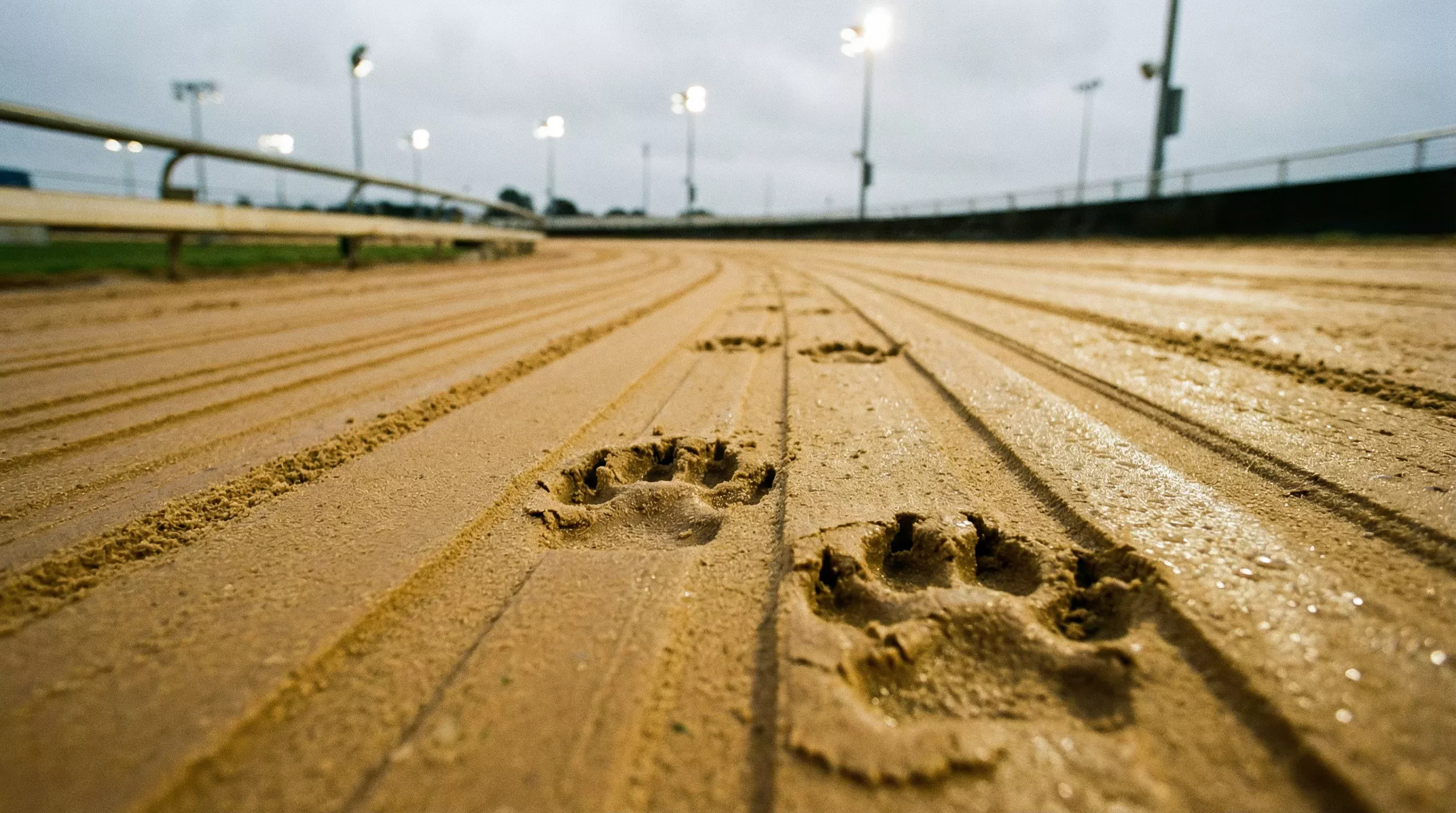
What Is Under the Paws Matters
The surface a greyhound runs on is the single most constant variable in its racing life. The dog changes condition, the weather changes, the competition changes — but the surface beneath the paws is, meeting after meeting, the same material treated to the same standard. At Sunderland and across the majority of GBGB-licensed tracks, that surface is all-weather sand: a specifically formulated composition designed to provide consistent grip, absorb impact, and drain efficiently in all conditions. It is the foundation on which every race result is built, and yet it receives remarkably little attention from most bettors and casual observers.
Understanding how sand surfaces work — what they are made of, how they behave in different weather, how they are maintained, and how they affect finishing times — adds a dimension to form analysis that raw numbers alone cannot provide.
Surface Science: Composition, Drainage and Seasonal Behaviour
All-weather sand in greyhound racing is not ordinary builder’s sand. It is a graded, washed material selected for specific properties: particle size, angularity, and moisture retention. The ideal greyhound-racing sand provides enough grip for a dog to push off without slipping, enough cushion to absorb the impact of landing after each stride, and enough drainage to shed water quickly after rain. Getting those properties right requires careful specification, and each track’s sand is sourced and tested to meet the standards set by the venue’s engineering requirements.
The particle size is critical. Too fine and the surface becomes compacted, losing its shock-absorption properties and approaching the characteristics of a hard surface. Too coarse and the sand shifts under the dog’s paws, creating an unstable running surface that increases energy expenditure and the risk of injury. The optimal range sits in between — particles large enough to maintain structure but small enough to provide consistent contact with the paw.
Drainage is engineered into the track’s sub-surface. Beneath the running sand sits a layer of aggregate and a drainage system designed to remove water as quickly as it arrives. On a well-maintained track like Sunderland, heavy rain will slow the surface temporarily but will not create standing water or dangerous conditions. The sand absorbs the moisture, the drainage layer pulls it downward, and the surface returns to its standard condition within a predictable timeframe. This is the “all-weather” element of the description — the track remains raceable in rain, frost, and heat, with surface conditions that shift within a manageable range rather than becoming unraceable.
Seasonal behaviour adds nuance. In summer, the sand dries out and becomes faster — less moisture means less drag on the paws, and finishing times tend to be quicker across the card. In winter, the sand retains more moisture, slows down, and demands slightly more effort from the dogs. Between those extremes, the going varies from meeting to meeting and is published in the going report before each fixture. At Sunderland, the going is categorised in terms that describe the sand’s moisture content and firmness, and the report is the first thing a serious form analyst checks before studying the card.
Maintenance Routine: Grading, Watering and Sand Replacement
A greyhound track surface does not maintain itself. Between meetings, and sometimes between individual races, the sand is graded, levelled, and conditioned to restore its racing properties. The maintenance routine at a track like Sunderland involves mechanical grading equipment that breaks up compacted areas, redistributes sand that has been displaced by the running of previous races, and ensures a uniform depth across the width of the circuit.
Watering is used to control the moisture content of the surface. On dry days, water is applied to prevent the sand from becoming too loose and dusty. On wet days, the drainage system handles the excess. The balance between too wet and too dry is managed by the groundstaff, who develop an intuitive understanding of their specific surface over years of experience. The going report is, in part, a reflection of the groundstaff’s assessment of how successfully they have achieved the desired moisture balance for that meeting.
Over longer periods, the sand itself degrades. Particles break down, organic material accumulates, and the surface loses some of its engineered properties. Periodic sand replacement — either partial top-ups or full resurfacing — is part of the long-term maintenance cycle. The frequency depends on the volume of racing: a track staging four meetings per week, like Sunderland, subjects its surface to more wear than one racing twice weekly. The investment required for these interventions is significant, and the GBGB’s Track Safety Committee distributed £168,000 in grants during 2024 to support safety and maintenance equipment at licensed venues — a figure that underscores the cost of keeping racing surfaces to the required standard.
For the bettor, the practical takeaway is that surface quality is not constant even at a single track. A meeting staged immediately after a full sand grade will produce slightly different conditions from one held at the end of a busy week. These differences are small but measurable, and they are reflected in the going report. Treating the going as a relevant variable — rather than ignoring it — gives form analysis an additional layer of accuracy.
Track Speed Comparison: How Sand Times Compare to Other Surfaces
Sand is not the only surface used in greyhound racing, though it is the most common at GBGB tracks. Some venues use different compositions or blends, and the variation in surface material creates measurable differences in finishing times. A 450m race run on Sunderland’s sand will produce a different time from the same distance at a track using a faster or slower surface, even if the dogs are identical in ability.
In general, sand surfaces produce slightly slower times than harder or more compacted alternatives. The cushioning effect that makes sand safer for the dogs — absorbing impact, reducing skeletal stress — comes at the cost of speed. Each stride on sand requires marginally more muscular effort than on a firmer surface, and over the course of a race that additional effort accumulates into a measurable time difference. This is why raw time comparisons between tracks are misleading and why calculated times, which adjust for venue-specific conditions, are the appropriate tool for cross-track analysis.
The speed characteristics of sand also vary with moisture. A dry sand surface at Sunderland on a summer evening might produce 450m times that are half a second faster than the same surface on a wet January afternoon. That half-second equates to roughly three lengths — a significant gap that has nothing to do with the quality of the dogs and everything to do with the condition of the surface. Ignoring the going when comparing a dog’s times across different meetings is one of the most common errors in casual form analysis, and it leads to mispriced assessments of which dog is the form pick.
For Sunderland specifically, the sand surface contributes to the track’s reputation for balanced racing. Sand provides more uniform grip across the width of the track than some alternatives, which helps explain why Sunderland’s trap distribution is so even. A surface that grips equally whether a dog is running on the inside rail or two lanes out removes one of the variables that creates trap bias at other venues. The fairness of Sunderland’s racing starts, quite literally, with the sand.
All-Weather Sand Tracks in Greyhound Racing — More on this topic at sunderland dogs results.
See also Friday Night at Sunderland Dogs.
