History of Sunderland Greyhound Stadium: From the 1940 Opening to the ARC Era
Best Greyhound Betting Sites – Bet on Greyhounds in 2026
 Available in US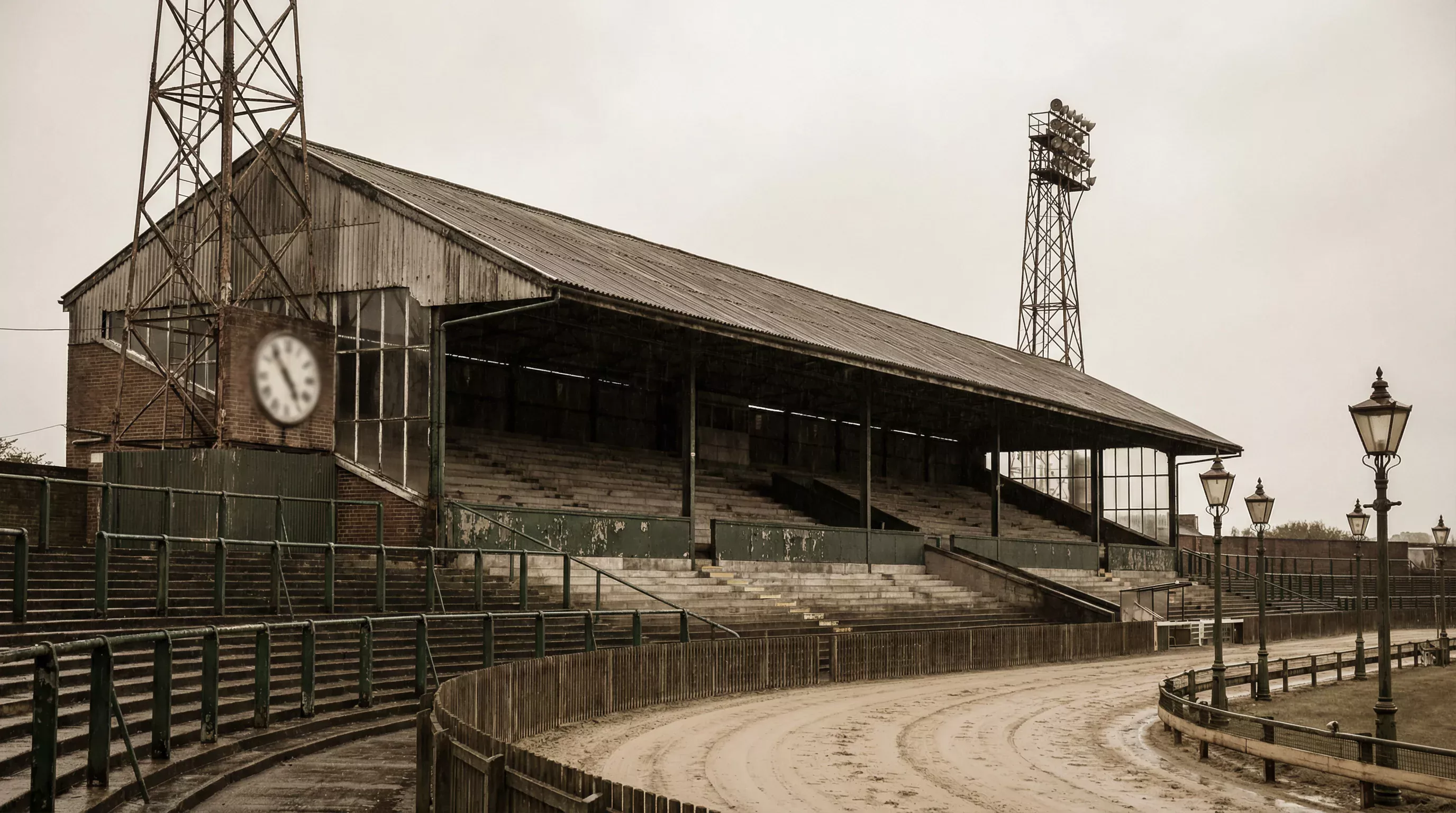
Eighty-Five Years on Wearside Sand
Sunderland Greyhound Stadium opened its gates in 1940, in the middle of a war, in a city built on coal and shipbuilding. It has survived recessions, cultural shifts, corporate takeovers, and the steady contraction of an industry that once supported dozens of tracks across the UK. In 2026, it is still racing. That longevity is not an accident — it reflects a combination of location, community support, and the kind of stubborn resilience that the north-east has always specialised in.
The stadium’s history is not a linear story of progress. There have been boom years and lean ones, significant investments and periods of neglect, moments of national prominence and stretches of quiet local service. What follows is a chronological account of how Sunderland’s greyhound track came to be, how it changed hands and evolved, and the milestones that have defined its eighty-five years.
Early Years: 1940 Opening, Percheron and Wartime Crowds
The stadium opened on 23 March 1940, constructed at a cost of £60,000 — a substantial sum at the time, equivalent to several million in today’s money. The first winner was a greyhound called Percheron, who broke from trap 2 at odds of 5/2 and crossed the line in 28.35 seconds. It was an auspicious beginning. The country was at war, rationing was tightening, and entertainment options were limited. Greyhound racing, with its short races, fast turnover, and modest admission prices, was perfectly suited to the moment.
Wartime crowds at Sunderland were substantial. In a city where heavy industry meant shift work and irregular hours, an evening at the dogs offered an accessible escape that required no advance planning and no significant expenditure. The stadium became part of the social fabric of Wearside almost immediately, drawing audiences from the surrounding mining communities, the shipyards along the river, and the city’s terraced streets. The demographics of those early crowds — working men, predominantly, spending a few shillings on an evening’s entertainment — established a pattern that persisted for decades.
Through the 1940s and into the 1950s, the stadium operated within a national greyhound-racing scene that was booming. Across the UK, greyhound meetings attracted millions of spectators annually, and the sport rivalled football in terms of attendance. Sunderland was one of dozens of tracks that thrived during this golden age, sustained by a combination of public appetite, limited competing entertainment, and the simplicity of the product: six dogs, one hare, thirty seconds of action, repeat.
The post-war years brought gradual change. Television arrived, offering entertainment that did not require leaving the house. The mining industry that had supplied much of Sunderland’s audience began its long decline. Greyhound racing nationally entered a period of consolidation, with weaker tracks closing and stronger ones adapting. Sunderland, anchored by a loyal local following and a location that served a wide catchment, survived where others did not. The stadium’s connection to the surrounding community — to the men who came off shift and walked to the track, to the families who treated a Saturday evening at the dogs as a weekly fixture — was the asset that no balance sheet could quantify but no competitor could replicate.
Rebuild and ARC Era: The £1m Refit, William Hill and the ARC Purchase
The stadium underwent a significant refurbishment in the 1990s and 2000s, with a reported investment of around £1 million by local promoters Terry Robson and Harry Williams. The rebuild modernised the facilities, improved the track surface, and brought the venue closer to the standard expected of a competitive greyhound stadium in the modern era. Harry Williams, in particular, became a defining figure in Sunderland’s greyhound history — a promoter and handler whose influence extended well beyond the track.
William Hill acquired the stadium as part of its broader portfolio of greyhound interests, operating it alongside Newcastle Greyhound Stadium. Under William Hill’s ownership, the stadium continued to function as a regular racing venue, but the corporate context was changing. Bookmaking companies were increasingly focused on their retail and online operations, and stadium ownership was not a core business priority. The writing was on the wall for a sale.
That sale came in May 2017, when the Arena Racing Company purchased both Sunderland and Newcastle from William Hill for £9.4 million. The acquisition brought the two north-east tracks into the ARC portfolio — the largest greyhound and horse-racing operator in the UK — and signalled a new phase for the stadium. ARC’s model combines racing operations with hospitality, entertainment, and media income, and Sunderland became part of a network of venues managed centrally with shared branding, scheduling, and investment strategies.
Under ARC, Sunderland was designated as a Premier Greyhound Racing venue, its fixtures incorporated into the BAGS schedule, and its flagship events — the Grand Prix and Classic — elevated to Category One status. The investment in hospitality infrastructure, the coordination of fixture lists with Newcastle, and the integration into ARC’s broadcast network transformed the stadium from an independently operated local track into a node in a national racing business. Whether that transformation preserved or diluted the stadium’s character is a question that regulars answer differently, but the commercial reality is clear: ARC’s involvement has kept the stadium operational and competitive at a time when independent greyhound venues have been closing across the country.
Key Milestones: Track of the Year, Speedway and the Scottish Derby
The stadium’s history is punctuated by milestones that reflect its varying fortunes and its moments of national recognition.
In 2005, Sunderland was awarded the title of Northern Greyhound Track of the Year by the then-governing body BGRB — a recognition of the standard of the facilities, the quality of the racing, and the effort invested in the post-rebuild era. The award came during a period when the stadium was performing at its modern peak, attracting strong fields and producing competitive racing across all its distances.
Between 1964 and 1974, the stadium hosted speedway racing alongside greyhound meetings. The speedway era brought a different audience and a different type of motorsport spectacle to the venue, though the two sports shared the same oval facility. The speedway operation eventually ceased, but it left a mark on the stadium’s identity — older regulars still remember the motorcycle races, and the speedway years are part of the fabric of the venue’s story.
In 1993, Sunderland hosted the Scottish Greyhound Derby, won by a dog named New Level. Hosting a national-level competition underscored the stadium’s capacity to stage events beyond its regular graded card — a capacity that would later be formalised through the Category One classification of the Grand Prix and Classic.
The stadium also witnessed the broader contraction of the sport. When Sunderland opened in 1940, there were scores of greyhound tracks across the UK. By 2026, eighteen remain. The stadium’s survival through that contraction is itself a milestone — not a dramatic one, but perhaps the most significant. Eighty-five years of continuous racing, through war and peace, boom and decline, corporate upheaval and community loyalty. The sand has been resurfaced, the stands have been rebuilt, and the dogs are faster than Percheron ever was. But the essential proposition — six traps, one hare, thirty seconds of uncertainty — remains exactly what it was on that opening night in March 1940.
History of Sunderland Greyhound Stadium — More on this topic at sunderland dogs results.
