Sunderland Dogs Parking and Getting There: Directions, Transport and Access
Best Greyhound Betting Sites – Bet on Greyhounds in 2026
 Available in US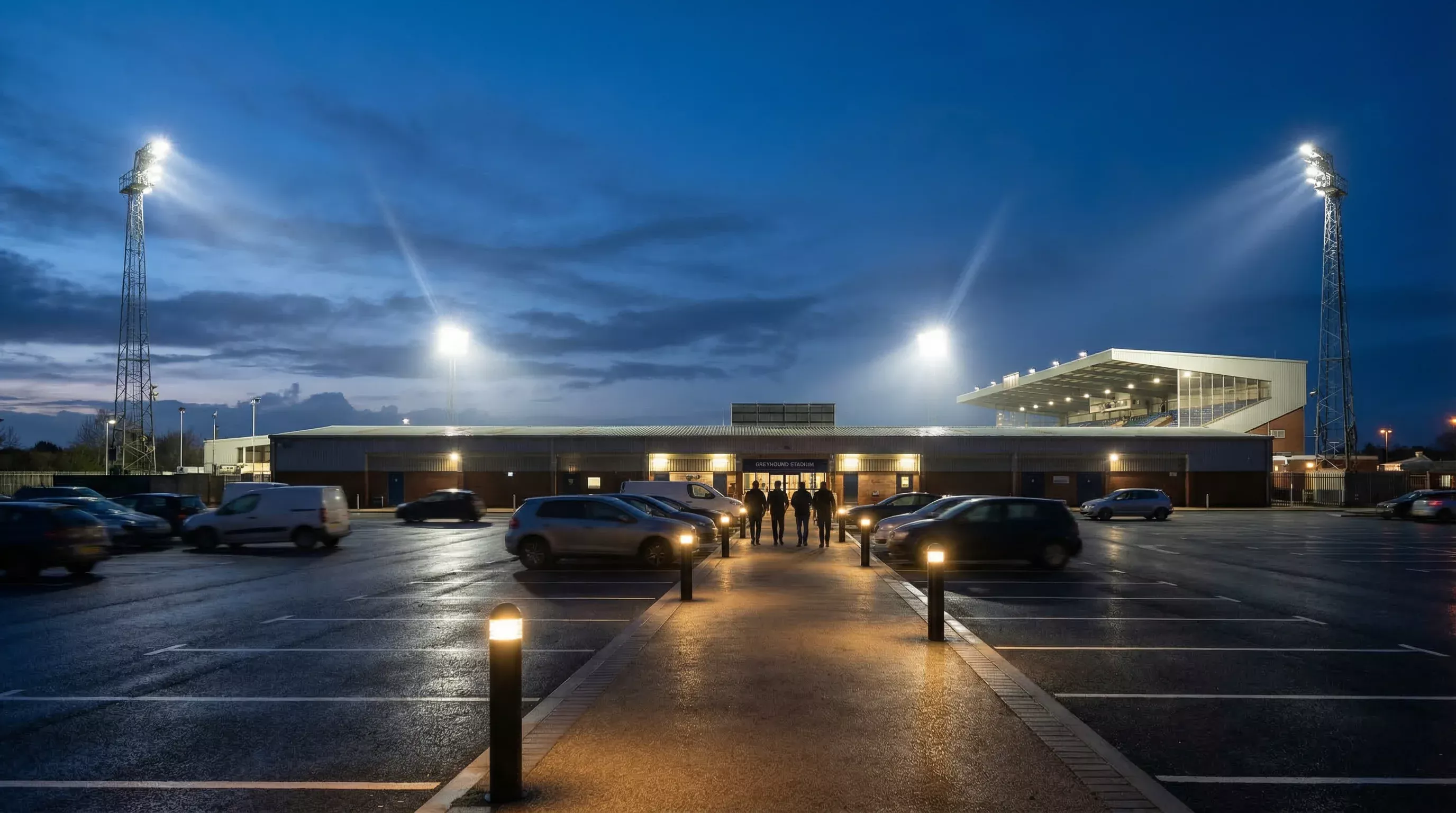
From Your Door to the Grandstand
Sunderland Greyhound Stadium sits on Stadium Way, close to the A19 and within easy reach of the city centre. The location is practical rather than picturesque — surrounded by retail and industrial development rather than parkland — but it has one significant advantage: accessibility. Whether you are arriving by car, public transport, or taxi, reaching the stadium is straightforward from most points in the north-east, and the journey rarely involves the kind of navigational complexity that can turn a simple trip into a frustrating one.
The stadium’s site near the A19 corridor places it at a junction point for traffic from Sunderland city centre, the wider Wearside area, Newcastle, and County Durham. That centrality within the region is one of the reasons the venue sustains four fixtures per week — it draws from a catchment that extends well beyond the city itself. Getting there is half the battle for any live event, and at Sunderland, the battle is a short one.
As Sarah Newman, Marketing and Communications Manager at ARC, noted, offering value and a quality experience is essential to attracting visitors trackside and encouraging them to return. Easy access is the first element of that equation — nobody comes back to a venue they struggled to reach.
Parking Layout: Capacity, Cost and Overflow
The stadium has its own car park, located directly adjacent to the venue. On a standard daytime meeting — Monday or Wednesday — the car park operates well below capacity, and finding a space is never an issue. On Friday evenings, particularly during busy periods or special events, the car park fills more quickly, and arriving early enough to secure a convenient spot is worth the minor effort.
Parking at Sunderland is typically free for racegoers, though it is worth confirming this for any specific event — special fixtures or competition finals may introduce temporary arrangements. The car park is surfaced and lit, with reasonable spacing between bays. It is not a multi-storey or a cramped urban lot; it is a flat, open-air facility that accommodates the vast majority of visitors without difficulty.
On nights when the car park reaches capacity — Grand Prix finals, Classic finals, and the occasional festive fixture — overflow parking may be available in adjacent retail or commercial areas. The stadium’s website or social media channels will typically advise in advance if overflow arrangements are in place. As a general rule, if you are attending a Friday evening meeting during a headline competition, arriving twenty to thirty minutes before the gates open gives you the best chance of parking close to the entrance.
The car park layout is uncomplicated. The entrance is clearly signed from Stadium Way, and the route from the car park to the stadium entrance is short — a walk of two or three minutes at most. There is no lengthy hike from a distant overflow lot to the grandstand. The proximity of parking to the venue is one of the quiet advantages of Sunderland’s location: it makes the arrival and departure process fast and simple, which matters particularly on winter evenings when the last race finishes after nine o’clock and the walk back to the car is best kept brief.
Public Transport: Metro, Bus and Rail Connections
Sunderland is served by the Tyne and Wear Metro, the regional bus network, and mainline rail. The Metro is the most commonly used public transport option for reaching the stadium, though the nearest Metro station is not directly adjacent — a short walk or a brief connecting bus ride is typically required.
The Stadium of Light Metro station, serving Sunderland AFC’s football ground, is the closest Metro stop to the greyhound stadium. The two venues are in the same general area, though a walk of approximately fifteen minutes separates them. For anyone familiar with the football stadium’s location, the greyhound stadium is a short continuation along Stadium Way. The route is straightforward, reasonably well-lit, and signposted.
Bus services connect the stadium area with Sunderland city centre, the Bridges bus station, and various suburban routes. The frequency of service varies by time of day — daytime meetings are well served by regular buses, but Friday evening return journeys may require checking the last-bus times in advance. Missing the last bus after a night at the dogs is an avoidable inconvenience that catches out the unprepared.
With ARC venues reporting growing footfall across 2025, including an 85% increase in attendance at Newcastle’s final nights, the demand for reliable transport connections to greyhound stadiums is increasing. For Sunderland, the combination of Metro access, bus connectivity, and the stadium’s proximity to the A19 means that most visitors can reach the venue within thirty minutes from anywhere in the Tyne and Wear conurbation.
Taxis are a reliable fallback, particularly for Friday evening departures. The journey from Sunderland city centre to the stadium takes approximately ten minutes by taxi, and the fare is modest. On busy nights, pre-booking a return taxi is advisable — the stadium car park can generate a cluster of simultaneous requests after the last race, and a pre-booked car avoids the wait.
For visitors travelling from further afield, Sunderland railway station connects to the mainline network. From there, a taxi or bus ride to the stadium takes roughly ten to fifteen minutes. Newcastle Central Station is also within practical range — a Metro connection to Stadium of Light followed by the short walk to the greyhound stadium is manageable within forty to fifty minutes, making Sunderland accessible for visitors staying in Newcastle who want to combine a night at the dogs with a cross-Tyne trip.
Accessibility Parking: Disabled Bays, Drop-Off and Mobility
The stadium provides designated accessible parking bays close to the entrance, reserved for visitors with valid Blue Badge permits. These bays are positioned to minimise the distance between the car and the stadium entrance, and they are available on a first-come basis. On standard meeting days, the accessible bays are rarely fully occupied. On busier Friday evenings, early arrival is recommended to secure one of the designated spaces.
A drop-off area near the main entrance allows passengers to be set down close to the stadium before the driver parks. This is particularly useful for visitors with mobility difficulties who benefit from a short walk from vehicle to entrance. The drop-off area is informal but functional — there is no dedicated kerb-side bay, but the layout permits a brief stop without obstructing traffic flow in the car park.
Inside the stadium, the ground-level layout is generally accessible. The viewing areas, betting windows, and restaurant facilities are reachable without stairs in most cases, though the specific configuration can vary between different sections of the venue. Visitors with specific accessibility requirements are encouraged to contact the stadium in advance so that appropriate arrangements can be made — reserved seating positions, assistance with access, or information about the layout that helps in planning the visit.
The overall accessibility picture at Sunderland is pragmatic rather than exceptional. The stadium was not built with modern accessibility standards in mind, but adaptations have been made over the years, and the willingness of the staff to accommodate individual needs fills most of the gaps. For wheelchair users, visitors with limited mobility, or anyone accompanying a person with access requirements, a brief phone call before the visit is the most effective way to ensure a comfortable evening.
Sunderland Dogs Parking and Getting There — More on this topic at sunderland dogs results.
See also How to Read Greyhound Results.
