ARC Grand Prix at Sunderland: History, £12,500 Prize Fund and Past Winners
Best Greyhound Betting Sites – Bet on Greyhounds in 2026
 Available in US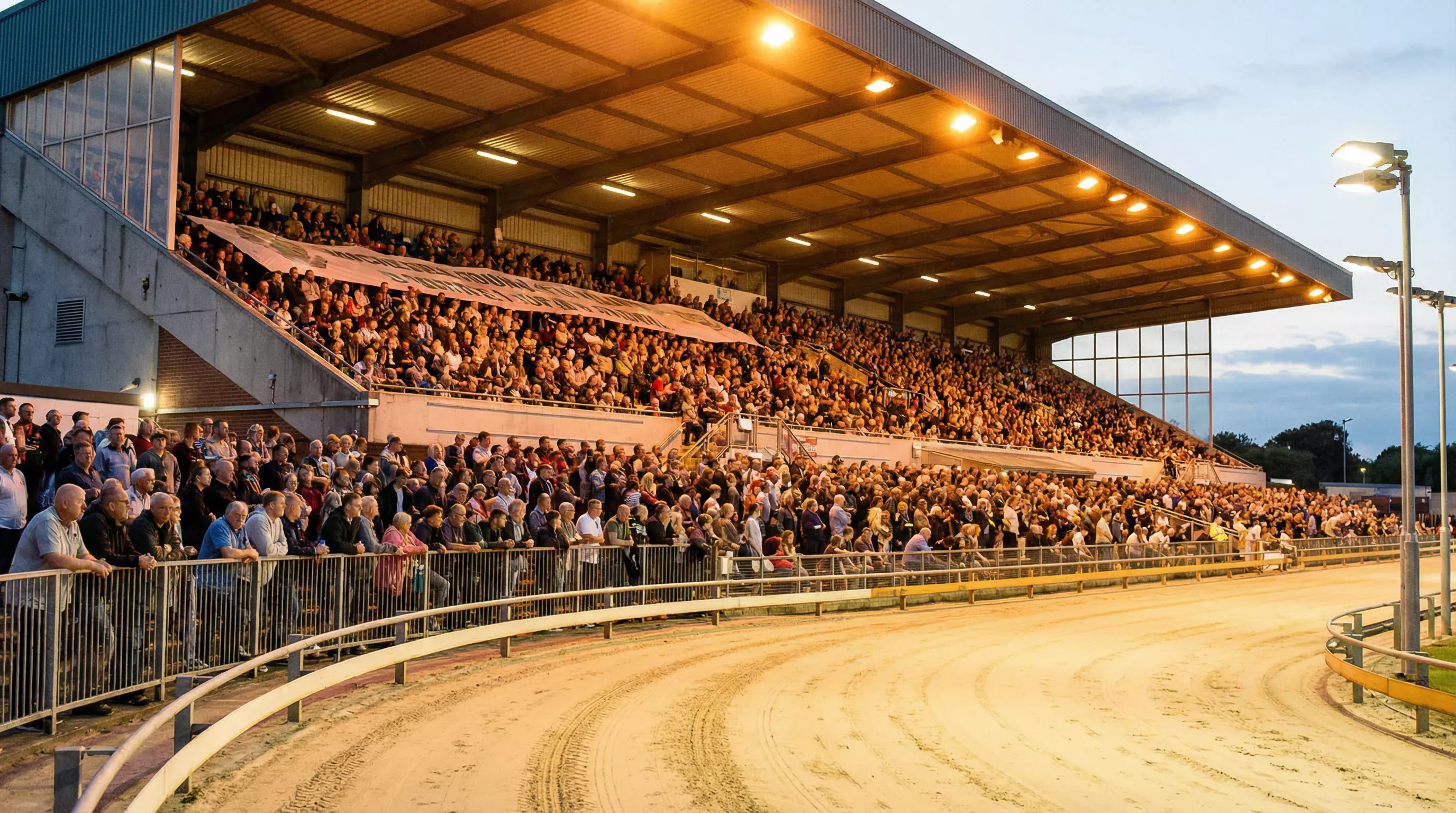
Sunderland’s Biggest Night on the Calendar
There is one evening each year when Sunderland Greyhound Stadium stops being a venue for regular graded racing and becomes something else entirely. The ARC Grand Prix is the stadium’s flagship competition — a Category One event that draws runners from across the country, fills the stands beyond any standard fixture, and carries a prestige that no amount of weekly racing can replicate. It is, by any measure, the biggest night on Sunderland’s calendar.
Category One is the highest classification in UK greyhound racing, reserved for a handful of events at selected venues. Sunderland holds two such competitions, but the Grand Prix, staged each April, is the one that defines the stadium’s place in the national racing landscape. The prize fund, the quality of the fields, and the intensity of the qualifying rounds make it a different experience from anything else the track hosts — for trainers, dogs, and the audience alike.
Understanding the Grand Prix means understanding its history, how the qualifying pathway works, and what the recent finals tell us about the standard of competition at Sunderland in 2026.
Grand Prix History: How the Event Grew to Category One
The ARC Grand Prix at Sunderland did not begin as a Category One event. Like most prestigious greyhound competitions, it grew incrementally — starting as a local open race, gaining a reputation for competitive fields, and eventually earning the classification that places it among the most important fixtures in British greyhound racing. That elevation to Category One status, with a prize fund of £12,500, reflected both the quality of the stadium and the strength of the regional racing community that supports it.
The Grand Prix’s rise mirrors the trajectory of the stadium itself. Sunderland has always been a significant venue in the north-east, but its national profile sharpened after the Arena Racing Company acquired it. The ARC takeover brought investment, branding, and a deliberate strategy to develop flagship events at each venue in its portfolio. The Grand Prix became the centrepiece of that strategy at Sunderland — an annual showcase designed to demonstrate that the stadium could host top-level competition, not just bread-and-butter graded racing.
Category One classification is not awarded lightly. The GBGB assesses the quality of the fields, the infrastructure of the venue, the prize money on offer, and the historical significance of the event. For the Grand Prix to hold that status year after year, Sunderland must consistently attract runners of sufficient quality and provide the facilities to stage the event at the required standard. The classification is both a recognition and an obligation — it says that the Grand Prix belongs in the top tier of UK greyhound racing, and that Sunderland must continue to earn that position.
The historical arc of the Grand Prix also reflects broader changes in the sport. As the number of licensed tracks in the UK has contracted — down to eighteen GBGB venues — the surviving stadiums have concentrated more competitive intensity. Fewer tracks mean fewer Category One events overall, which raises the significance of each one. The Grand Prix at Sunderland is not just a local occasion; it is one of a diminishing number of nights in the calendar when the sport operates at its highest level.
Qualifying Route: Heats, Semis and the Final
The Grand Prix is not a single race. It is a multi-round competition spread across several weeks, with heats, semi-finals, and a final that together form a qualifying pathway designed to identify the six best dogs from the entry pool. That structure is part of what gives the event its weight — the winner has not just won one race, but has survived a process that eliminates the field progressively.
The competition typically opens with first-round heats, in which a field of dogs is divided into groups of six. Each heat is run over the standard 450m distance at Sunderland, and the top two finishers from each heat — sometimes along with the fastest losers — advance to the next round. The heats are competitive in their own right; trainers enter their best dogs, and the pace from the first round onward reflects the open-race standard rather than the graded racing that fills the regular card.
Semi-finals follow the same format. The survivors of the heats are reshuffled into new groups, and the process repeats. By this point, the field has been reduced to a concentrated pool of dogs that have demonstrated the ability to perform under the specific pressure of knockout competition. A dog that coasts through a graded race might find the semi-final environment entirely different — the quality of the opposition is higher, the pace is faster, and the margin for error is smaller. Dogs that advance through the semis have proven themselves in back-to-back high-quality races, which is a more demanding test than any single event.
The final is run on a designated evening, usually a Friday night, and it is the culmination of the entire qualifying sequence. Six dogs, each the survivor of two or more rounds, line up for the prize. The atmosphere on Grand Prix final night at Sunderland is distinct from any other meeting — the crowd is larger, the betting volume is higher, and the focus of the racing community nationally is directed at this single race. The final is run over 450m, and the result enters the stadium’s records as the definitive statement of greyhound quality at Sunderland for that year.
For form analysts, the qualifying rounds produce some of the most valuable data available at the track. Dogs running in Grand Prix heats are operating at peak fitness against above-average opponents. Their times, sectional splits, and bend positions from these rounds are a truer reflection of their ability than anything posted in a standard graded card. If you are studying form for the final itself, the heat and semi-final results are the primary evidence — more recent, more relevant, and more pressurised than any other form line.
Recent Winners: Results, Times and Memorable Finals
The recent history of the ARC Grand Prix at Sunderland tells a story of consistent quality and occasional moments of genuine drama. In 2024, the competition was won by Farneys Willie, trained by Richard Wales — a result that demonstrated both the depth of the north-east racing scene and the ability of regionally based dogs to compete at the highest level. The 2024 final was a competitive affair, decided by margins that confirmed the strength of the qualifying process in filtering the field down to six closely matched contenders.
Grand Prix finals at Sunderland tend to produce times that sit at the sharp end of the stadium’s range for the 450m distance. That is not surprising — the dogs that reach the final are the best available, prepared specifically for the occasion, and running on a surface they have already negotiated in the heats and semis. A Grand Prix winning time often lands within a few tenths of a second of the track record, and on rare occasions it challenges the record itself. These times provide a useful benchmark: they represent the ceiling of what the stadium can produce under competitive conditions.
The status of Sunderland as a venue capable of staging such events is underscored by its recognition as Northern Greyhound Track of the Year in 2005, awarded by the then-governing body BGRB. That accolade, combined with the continued hosting of Category One competitions, places the stadium among the most respected racing venues in the north of England — a position that the Grand Prix reinforces with each edition.
For those tracking the Grand Prix over multiple years, patterns emerge. Certain trainers appear in the final repeatedly, suggesting that their preparation methods and access to high-quality dogs give them a structural advantage in open competition. Certain trap draws produce more winners than others across finals, though the sample size is small enough that conclusive trends are hard to establish. And certain types of dog — typically those combining fast trapping with sustained pace rather than pure closers — have historically fared best in the final, where the pace from the off tends to be fiercer than in any graded race at the venue.
The Grand Prix is not just a race. It is the annual test of Sunderland’s competitive credentials, and its recent winners are the names that define the stadium’s modern era.
ARC Grand Prix at Sunderland — More on this topic at sunderland dogs results.
See also Sunderland Open Competitions.
