Greyhound Racing in the UK: Industry Overview, Finances and 2026 Outlook
Best Greyhound Betting Sites – Bet on Greyhounds in 2026
 Available in US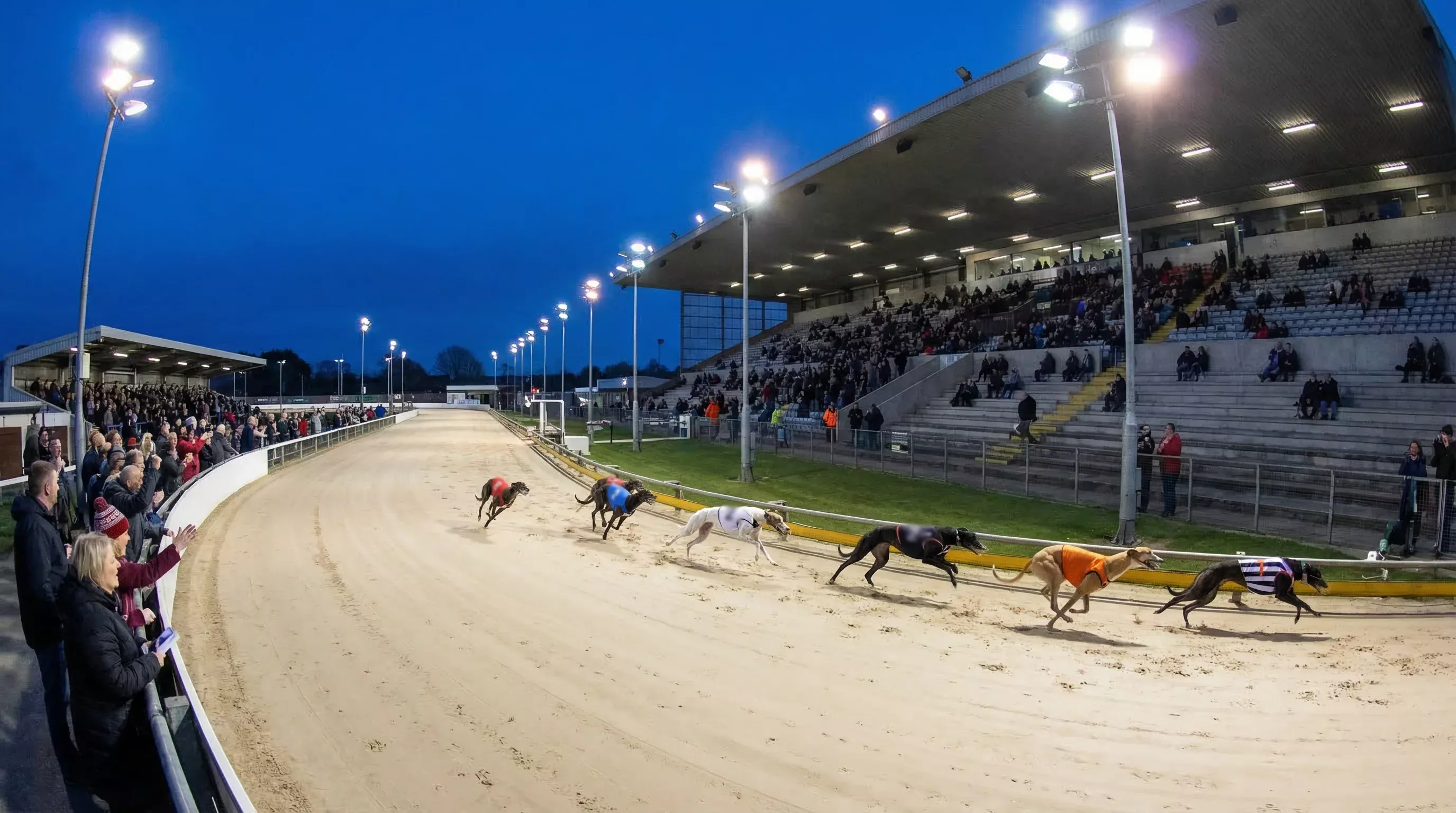
Where the Sport Stands in 2026
Greyhound racing in the United Kingdom in 2026 is an industry defined by contradiction. It generates nearly £800 million in annual betting turnover and attracts growing crowds at well-managed venues. It is also contracting geographically, facing a legislative ban in Wales, and operating on a financial model that its own leadership describes as inadequate. The sport is simultaneously popular and precarious, profitable for bookmakers and underfunded at the track level, growing its audience in some regions while losing its foothold in others.
Understanding where Sunderland and the other licensed tracks fit within this picture requires a view of the industry’s scale, its financial architecture, and the forces that will shape its direction over the next several years.
Industry Scale: Tracks, Dogs and Personnel
The UK has eighteen GBGB-licensed greyhound stadiums, all of them in England. Scotland’s last licensed track has closed. Wales has one remaining venue, but the Prohibition of Greyhound Racing (Wales) Bill, introduced in the Senedd on 29 September 2025 and passed at Stage 1 by 36 votes to 14, sets a timeline for closure between April 2027 and April 2030. When the Welsh ban takes effect, the count will drop to seventeen, and the sport’s geographic footprint will be entirely English.
The eighteen tracks are operated by a handful of corporate groups, the largest of which is the Arena Racing Company, and a smaller number of independent operators. ARC alone runs twelve greyhound stadiums through its GMG subsidiary. The concentration of ownership means that decisions made at the corporate level — about scheduling, investment, hospitality, and pricing — have an outsized effect on the industry. Sunderland operates within this structure, its fixtures, broadcast arrangements, and competition calendar determined as much by ARC’s national strategy as by local demand.
The workforce behind the racing is larger than casual observers might expect. The industry employs approximately 500 licensed trainers, around 3,000 kennel staff, roughly 700 stadium officials, and serves some 15,000 registered greyhound owners. Each year, about 6,000 new dogs are registered for racing. These are not hobbyist numbers. Greyhound racing is a functioning industry with a supply chain, a labour force, and a commercial ecosystem that sustains thousands of livelihoods.
The dogs themselves are overwhelmingly Irish in origin — around 84.5% of new registrations in 2024 came from Irish breeders, with the remaining 15.5% from British litters. That dependence on Ireland for supply is a structural feature of the industry, and it connects UK greyhound racing to a separate regulatory and breeding system across the Irish Sea. Any disruption to the Irish supply chain — regulatory changes, export restrictions, or shifts in Irish breeding economics — would have immediate consequences for the availability and quality of dogs at UK tracks. The proportion of British-bred dogs has been rising slowly — up from 13.1% in 2021 — but the industry remains fundamentally reliant on Irish imports, and that reliance carries both logistical and political risk in a landscape where animal welfare scrutiny is intensifying on both sides of the Irish Sea.
Financial Structure: Betting Turnover, BGRF and the Levy
The financial engine of UK greyhound racing is betting. In the reporting period of April 2023 to March 2024, total betting turnover on greyhounds reached £794 million. That figure places greyhound racing as a significant component of the UK gambling market — smaller than horse racing but larger than many other sports in terms of wagering volume.
The mechanism through which betting revenue feeds back into the sport is the British Greyhound Racing Fund. The BGRF collects a voluntary levy from bookmakers, set at 0.6% of their greyhound betting turnover, and distributes the proceeds to tracks, trainers, and welfare programmes. In the 2024–25 financial year, the BGRF collected £6.75 million through this levy. That sounds substantial until you compare it to the sport’s historic funding levels and to the funding enjoyed by horse racing, which benefits from a statutory levy that cannot be opted out of.
BGRF Chairman Joe Scanlon has been blunt about the gap. As he wrote in his 2024 Chairman’s Message, the current income level is a long way from the fund’s peak years, when contributions ranged between £10 million and £14 million in real terms. The industry is learning to make every pound work harder, Scanlon acknowledged, but the trajectory points toward a future where income may not be enough to meet the sport’s ambitions — including its welfare commitments, which have expanded significantly since 2018.
The campaign for a statutory levy — a compulsory contribution from bookmakers, replacing the current voluntary system — is the industry’s principal financial strategy. GBGB Chief Executive Mark Bird has argued publicly that as long as the levy remains voluntary, with some bookmakers choosing not to contribute their full share, the sport’s progress on welfare and infrastructure will remain vulnerable. The statutory levy would require government legislation, and the political environment for gambling-adjacent policy is complex. Progress has been slow, and the timeline for any legislative change remains uncertain.
Future Outlook: Wales Ban, Statutory Levy and Footfall Trends
Three forces will shape UK greyhound racing over the next several years, and each points in a different direction.
The Wales ban is the most immediate. The Prohibition Bill’s passage at Stage 1 signals strong political support for ending greyhound racing in Wales. If the bill completes its legislative journey, the single Welsh track will close, and the precedent may embolden campaigners seeking a similar ban in England. The industry’s response has been to emphasise the welfare improvements made since 2018 — lower injury rates, higher retirement success, better kennel oversight — as evidence that regulated racing can operate responsibly. Whether that argument holds politically is an open question.
The statutory levy campaign is the medium-term priority. Without a mandatory contribution from bookmakers, the BGRF’s income is likely to remain flat or decline in real terms, creating a widening gap between the sport’s welfare obligations and its financial resources. A statutory levy would stabilise the funding base and allow the sport to plan on longer horizons. The political pathway to that outcome runs through Westminster, and the greyhound industry’s lobbying capacity is modest compared to the bookmaking sector it is seeking to levy.
Footfall trends provide the most encouraging data. Across ARC’s greyhound venues, attendance grew in 2025, with some tracks reporting dramatic increases for headline events. This growth suggests that the live experience — the Friday night out, the restaurant package, the social occasion — has a market that has not been fully tapped. If the sport can sustain and extend this trend, the argument for its continued viability strengthens. A sport that attracts growing audiences is harder to ban and easier to fund than one playing to empty stands.
For Sunderland, the outlook is shaped by all three forces. The stadium is well-managed, well-attended on its best nights, and part of a corporate network that provides financial stability. Its Category One competitions, its balanced track, and its regional loyalty give it assets that many venues lack. But it operates within an industry whose structural challenges — funding, geography, and politics — are real, unresolved, and consequential. In 2026, Sunderland is racing well. The question is whether the industry around it can sustain the conditions that allow it to keep doing so.
Greyhound Racing in the UK — More on this topic at sunderland dogs results.
See also Sunderland Greyhound Results Tonight.
