Sunderland Greyhound Trainers: Top Handlers, Win Rates and Kennel Histories
Best Greyhound Betting Sites – Bet on Greyhounds in 2026
 Available in US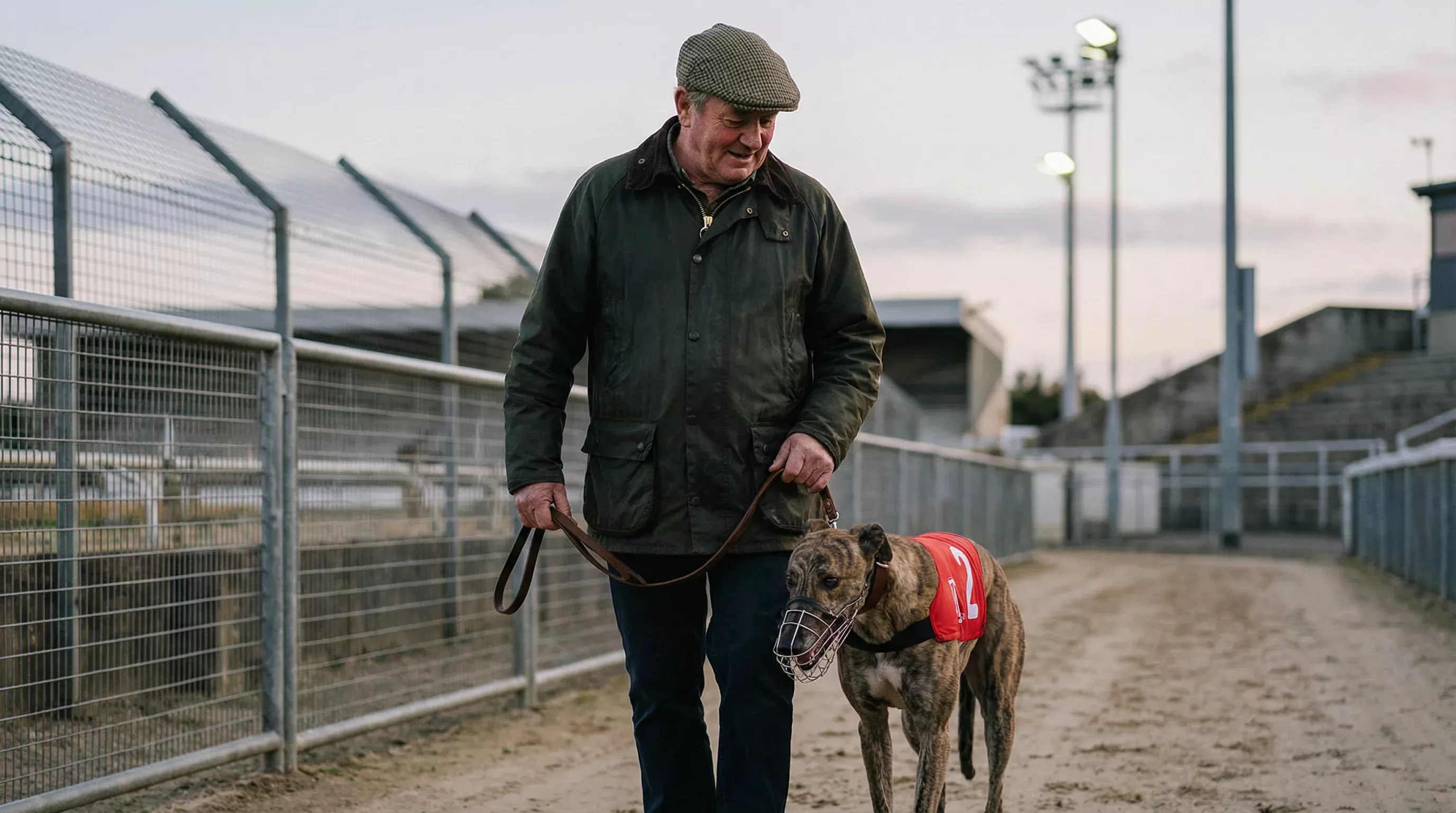
The People Behind Sunderland’s Fastest Dogs
Greyhound results are published under the dog’s name, but every performance on the track is shaped by someone whose name does not appear in the headline: the trainer. Trainers are the hidden variable in greyhound racing. They decide which distance suits a dog, which trap draw to request, when to rest a runner and when to push it, and how to prepare for specific races. Two dogs of identical ability, in the hands of two different trainers, will produce different results over a season. The trainer’s skill is the multiplier that turns natural talent into consistent performance.
At Sunderland, the training community is a blend of established professionals, family operations, and newer handlers building their kennels. The UK greyhound industry employs approximately 500 licensed trainers nationwide, supported by around 3,000 kennel staff and answering to some 15,000 registered owners. The trainers who operate at Sunderland form a subset of that number — predominantly based in the north-east of England, with kennels close enough to the stadium to transport dogs on race days without excessive travel.
Understanding who trains the dogs you are analysing adds a dimension to form study that raw numbers cannot provide. A trainer’s record at Sunderland — win rate, preferred distance, and kennel size — tells you about the pattern of results to expect from their runners.
Top Handler Profiles: Leading Trainers at Sunderland
Sunderland’s leading trainers tend to be figures who have been involved with the track for years, sometimes decades. Their names appear repeatedly in the results, and their kennel operations are tailored to the specific demands of this venue — the sand surface, the balanced trap distribution, the four-fixture weekly schedule that requires managing dogs across multiple race nights without overtraining.
A top handler at Sunderland will typically manage a kennel of fifteen to thirty dogs, spread across various grades and distances. The best trainers do not specialise narrowly; they campaign dogs at 261m sprints and 640m stayers trips, adjusting their approach to each animal’s strengths. What distinguishes a leading trainer from an average one is not the quality of the dogs they receive — although connections with good owners and productive Irish breeding operations help — but the ability to maximise whatever a dog has. A trainer who takes a C-grade runner and keeps it competitive at that level for eighteen months, managing weight, fitness, and race spacing expertly, is performing at a higher level than one who wins an open race with a gifted animal that would succeed under almost any handler.
The relationship between trainer and track is closer in greyhound racing than in many sports. Trainers are present at the stadium on race nights, supervising their dogs through the kennelling process, the pre-race parade, and the post-race assessment. They watch their runners from trackside, read the body language of each dog, and make immediate decisions about the next outing. This proximity produces a depth of knowledge about individual animals that no external form analyst can replicate. When a leading Sunderland trainer enters a dog at an unusual distance or changes its trap request, that decision is informed by observations that do not appear in any published dataset.
For bettors, trainer form at Sunderland is a legitimate factor. Some trainers consistently perform above the average strike rate during certain periods — often coinciding with a batch of new dogs coming through the kennel from Ireland, or a successful spell with a particular sire line. Tracking trainer win rates over rolling three-month windows can reveal hot streaks that persist long enough to be actionable. Conversely, a trainer whose strike rate has dipped below the norm may be managing a kennel turnover, adjusting to new dogs that have not yet found their grades. These patterns are visible in the data and worth monitoring.
Trainer Statistics: Win Rate, Preferred Distance, Kennel Size
Trainer statistics at Sunderland can be broken down into three core metrics: win rate, distance preference, and kennel size. Each tells you something different about how a trainer operates and what to expect when one of their dogs appears on the card.
Win rate is the most cited number, but it needs context. A trainer with a 20% strike rate from 200 runners over twelve months is performing strongly. A trainer with a 25% strike rate from 20 runners may simply have had a handful of good dogs in a small sample. The size of the sample matters as much as the percentage. At Sunderland, the busiest trainers will have several hundred runners per year, producing statistically robust win rates. Smaller operations produce noisier data. When using trainer stats to inform your analysis, weight the reliability of the figure by the number of runners behind it.
Distance preference is revealing. Some Sunderland trainers specialise in sprints, consistently entering dogs at 261m and rarely venturing beyond 450m. Others are stayers handlers, with kennels stocked for 640m and the occasional 828m marathon. A few elite trainers compete successfully across all four distances, but that requires a large and varied kennel. Knowing a trainer’s distance preference helps you assess whether a dog is being entered at its optimal trip. A sprint trainer entering a dog at 640m for the first time is either experimenting or sees something in trials that the public record does not yet reflect — either way, it warrants attention.
Kennel size determines the volume of runners a trainer fields at Sunderland. Larger kennels mean more dogs in more races, which produces more data and a more stable win rate. It also means the trainer is managing more competing demands — balancing race fitness, rest periods, and grade transitions across a bigger string. The infrastructure that supports these operations matters, and the industry recognises this. In 2024, the GBGB’s Trainers’ Assistance Fund distributed £503,910 toward improving kennel facilities and training grounds, a direct acknowledgement that the quality of a trainer’s environment affects the quality of their dogs’ racing.
The combination of these three metrics — win rate, distance preference, and kennel size — creates a trainer profile that can be cross-referenced with individual dog form. A dog from a high-win-rate trainer that specialises in the distance being raced is a stronger proposition than one from a lower-performing kennel entered at an unfamiliar trip. The trainer’s record is not a substitute for studying the dog, but it provides a frame through which individual form becomes more readable.
Kennel Traditions: Multi-Generational Families in Sunderland Racing
Greyhound racing in the north-east of England is not just a profession — for many families, it is an inheritance. Several of Sunderland’s most successful kennels have been operated by the same families across two and sometimes three generations, with knowledge passed down alongside the dogs themselves. This tradition gives Sunderland’s training community a depth that newer venues and more transient regions cannot match.
The family kennel model works because greyhound training is a craft that benefits enormously from accumulated experience. A trainer who grew up watching their father or mother prepare dogs for Sunderland’s sand surface internalised lessons about conditioning, feeding, and race management before they ever held a licence. That tacit knowledge — the kind that cannot be written in a manual — produces handlers who understand their dogs at an intuitive level, reading behaviour and body language in ways that are difficult to teach from scratch.
The multigenerational pattern also creates continuity with owners. An owner who has been placing dogs with a family kennel for fifteen years trusts the operation in ways that a new relationship cannot replicate. That trust means the trainer has greater latitude in making decisions — resting a dog when the form suggests pushing it, or trialling a runner at a longer distance that the owner might not have chosen. In a sport where margins are thin, the freedom to make the right call at the right time is a competitive advantage.
Sunderland’s position as a regional track reinforces these traditions. The trainers who race here live within a practical radius of the stadium, typically in County Durham, Tyne and Wear, or Northumberland. The community is tight-knit enough that trainers know each other’s dogs, compare notes informally, and share an understanding of the track’s particular characteristics. That local network is part of what makes Sunderland a distinctive racing environment — the dogs are national in origin, often imported from Ireland, but the people who prepare and race them are rooted in a specific place and a specific tradition.
For the form student, the family kennel carries a practical implication: consistency. A multigenerational operation is less likely to produce erratic patterns in its results than a recently established one still finding its methods. When you see a Sunderland trainer’s name that you recognise from years of results, you are looking at a handler whose approach is settled and whose form figures can be interpreted with confidence. The dog may be unpredictable. The trainer is not.
Sunderland Greyhound Trainers — More on this topic at sunderland dogs results.
See also ARC Grand Prix at Sunderland.
